Health & Fitness
What is Wrong with Education in California?
Meuser speaks about education in the state of California and what has led us to the place we are at where California is receiving a failing grade.

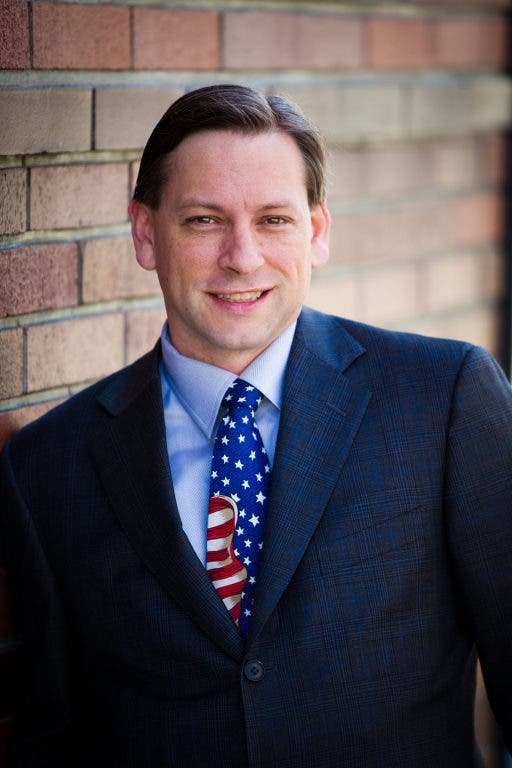
In my opinion, the 1971 California Supreme Court’s decision of Serrano v. Priest is a major reason why the state of California is receiving a failing grade when it comes to education. The Serrano court attempted to be fair to the economically depressed. Instead, the court ended up hurting all students in this state. The Serrano court took what had been a local issue and turned it into a state issue.
Very few will argue that California used to have one of the best educational systems in the United States if not in the world. Very few will argue that California now has one of the worst educational systems in the United States according to a plethora of leading indicators.
Californians are concerned about their children’s education; however many will say that this concern does not translate to the state spending on education. The question is: What can we do about this problem? I will be the first to admit that I do not have a magic wand that will return California’s educational system back to a world leader. However, that being said, I wanted to take a minute to remind everyone how things were different in this state when we led the world and where we are now. Maybe in understanding our past, our state legislature can start making some decisions to help us restore California greatness.
Find out what's happening in Walnut Creekwith free, real-time updates from Patch.
Many love to point a finger at Proposition 13 as the culprit for why California has so many problems in this state. However, I would like to make the case that the problem actually started several years before with a bunch of trial lawyers who pursued a case to level the playing field between the rich and the poor.
In the 1960s, California’s schools were funded by property taxes. The vast majority of each school district’s funds were based upon how much each school district was willing to tax itself to pay for its student’s education. School districts were full of local businessmen who derived a benefit from having a better school district.
Find out what's happening in Walnut Creekwith free, real-time updates from Patch.
However, in 1971, the California Supreme Court ruled that the way California funded its school system was unconstitutional because each child in California did not have equal educational resources. The result of Serrano was that there was a shift in funding from local school districts to Sacramento.
The state of California saw a transition where local school districts lost a lot of their control. Collective bargaining for teachers soon arose and school boards found it next to impossible to get rid of underperforming teachers. Basically, it was the golden rule: "He who holds the gold, makes the rules." Sacramento was now paying for education and thus they were controlling the rules of the game.
In 1970, almost 50% of the money that was spent on education was actually spent on teacher’s salaries. This percentage has been dropping steadily ever since. In the meantime, while the percentage of school budgets being spent on teachers has been declining, the percentage of money being spent on school administrators has steadily been increasing. Sacramento keeps imposing more rules upon the school districts thus resulting in school districts having to hire more administrators in order to deal with all these new rules.
As a result of Serrano, what has happened in this state is that we have made what was supposed to be a local issue into a state issue. By trying to be fair to all students, we ended up hurting all students. Rather than helping the students who were the most economically depressed, we ended up hurting all Californians.
The problem with having Sacramento in charge of schools is that there is limited control by those who are the most affected. When you had local school boards in control, if a school board made a mistake, it did not take too much community involvement to get rid of an entire school board. However, it would take billions of dollars to drastically change the state legislature in order to change the way that the state is handling education.
I was recently talking with one teacher who says that he does not have enough time to teach the United States Constitution. Teacher after teacher informed me that Sacramento has imposed so many rules upon them that students are not learning the basics. They feel that regulations are ruining our student’s future to allow some administrator can simply check off a box and report back to Sacramento that minimum requirements have been met.
I believe that if we want to see our schools succeed, we need to return power back to the people by returning control of our schools back to our local school boards. We need to let teachers teach. According to the Contra Costa Times, my opponent, Mark DeSaulnier believes that it is the state’s responsibility to hold school districts accountable.
What incentive do voters in San Diego have to replace their local senator because there is a problem with schools in Contra Costa County? A state senator is not the proper person to be holding school boards accountable. The local school board should be accountable. Rather than watching our local taxes go to the state and then having a portion sent back to the school districts, it would be better if the local tax remained local.
If elected, it is my goal to help restore California greatness. In order to do this, we need to start going back to the principles that were in place when California had one of the best educational systems in the world. Instead of dumbing down our schools to the lowest common denominator, it is time to push our schools to excel in every level.
For 40 years we have tried Sacramento’s control over our school system; Sacramento’s grade on running California’s school system is an F-. If we want to return to the best schools in the world, we need to take what is being treated as a state issue and return it to a local issue. Local control is how we succeeded before and it is how we will succeed in the future.
Mark Meuser is a candidate for State Senate District 7. You can follow him on Facebook.


